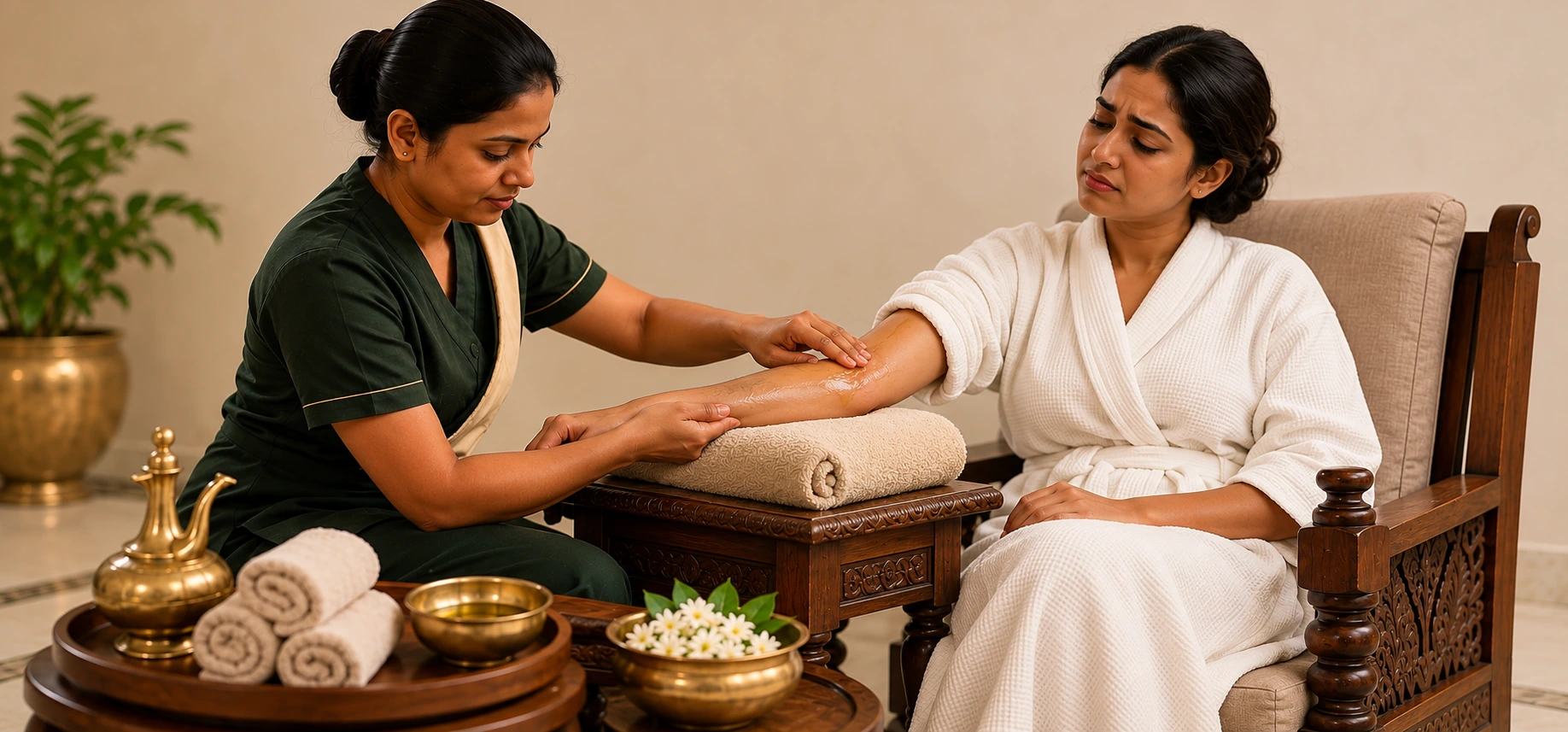
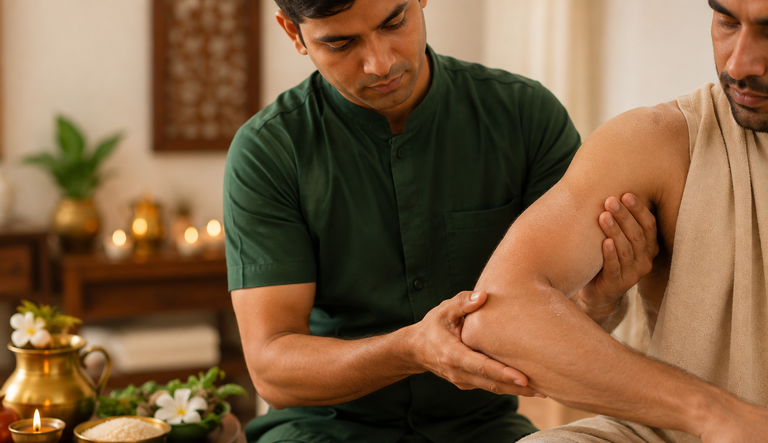
The process usually starts with questions about when the symptoms began, what activities make the pain worse, which activities cause tenderness or grip issues, work requirements, participation in sports, and any previous injuries.
The practitioner will evaluate movement and any functional limitations. The evaluation is important in distinguishing tennis elbow from other conditions since elbow pain can have various causes.
Sometimes, further medical assessment or tests may be needed if the symptoms do not improve or are unusual.
An Ayurvedic consultation may help along with appropriate medical care and should not replace urgent medical attention if warning signs are present.
How to Help an Elbow Heal – Practical Tips
During recovery, it is important to understand how to manage the activities that trigger symptoms.
Avoid trying to perform the painful movement to see if it still hurts. Talk to a healthcare provider about the appropriate level of activity.
Maintain good ergonomic habits. Avoid holding on hard for extended periods. Take regular breaks from activities. Keep your wrist in a comfortable position when using a mouse or typing.
If you think you are developing a repetitive strain, consider your technique and equipment for sports or manual work. Gradually increase your training or workload instead of making sudden changes.
Some individuals may benefit from exercise.
Rehabilitation programs often include stretching and progressive strengthening of the wrist and forearm, but these programs should be tailored to the individual and progressed carefully.
When to Seek Professional Help
If elbow pain continues even after changing activities, comes back often, or interferes with work, exercise, sleep, or daily activities, it is important to consult a qualified healthcare professional.
Especially if the diagnosis is unclear, the evaluation is important.Seek immediate medical attention following serious injury, especially if you experience severe pain, deformity, significant swelling, sudden loss of movement, or numbness or tingling. These symptoms might suggest a condition other than simple tennis elbow.