Joint Pain Treatment

Ayurvedic treatment for joint pain

Joint discomfort can profoundly disrupt the fabric of daily existence, rendering even fundamental activities such as ambulation, sitting, and sleep arduous. While some individuals contend specifically with knee pathology, others suffer from cervical or spinal distress. These afflictions frequently impede professional responsibilities and mundane domestic duties. Ayurvedic Treatment for Joint Pain Dubai, Sharjah, and Ajman, Ayurmana Ayurveda addresses joint-related concerns through traditional Ayurvedic interventions tailored for patients in Dubai, Sharjah, and Ajman. The clinical approach commences with a comprehensive assessment of the patient’s physiological status, followed by a collaborative deliberation regarding the most suitable therapeutic modalities. Although Ayurveda and Panchakarma serve as potent adjuncts to joint management, they must never supplant essential medical examinations or prescribed pharmacological regimens.
Originating from India, Ayurveda constitutes a venerable medical framework that emphasizes the equilibrium between mental and physical states while according significant importance to nutrition, rest, and daily routines.
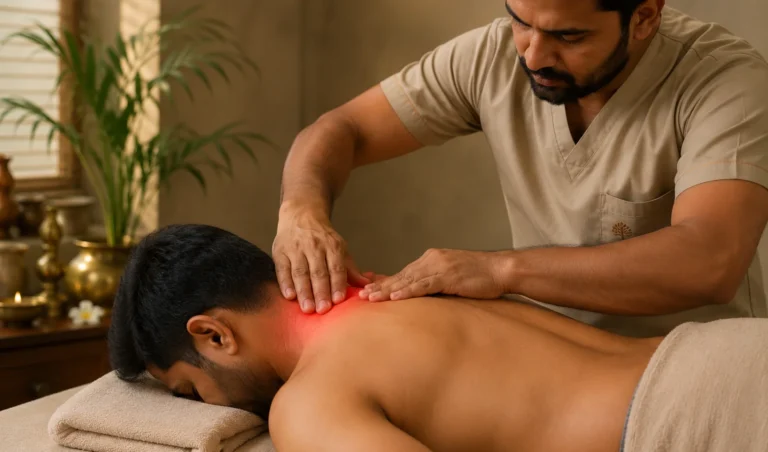
Therapeutic interventions within this tradition may encompass massage therapies, the application of herbal oils, and steam treatments, and can further involve Panchakarma procedures; however, since individual health requirements vary, preliminary consultation with a physician is essential before initiating any regimen. Consequently, it is invariably advisable to seek the counsel of a qualified practitioner when addressing joint pain in Dubai.

The Ayurvedic Perspective on Joint Health: The Root Cause of Pain

In the framework of Ayurveda, the integrity of joint health is intrinsically connected to the Vata dosha, one of the three fundamental bio-energies that govern physiological function.
Specifically, Vata serves as the dynamic force directing all somatic movement, characterized by inherent qualities of dryness and lightness. Joint pain treatment in Dubai, Sharjah and Ajman, Ayurvedic practitioner may evaluate this condition, specifically regarding the equilibrium of Vata.
Such an assessment often encompasses inquiries into the patient’s age, dietary patterns, and the nuances of their professional and daily existence. These comprehensive details serve as the foundation for crafting a tailored therapeutic regimen. It is crucial to recognize, however, that Ayurvedic conceptualizations do not equate to conventional medical diagnoses.

Real-World Evidence: What Clinical Observations Show

Clinical Observations: There have been studies on Ayurveda and joint pain. They have found changes in pain and in daily motion. However, the results vary from one person to another. The care taken in each study may also differ. 

Changes in pain

Some studies report less pain after ayurvedic care. But small studies cannot prove that the change was due to the care. More studies are required.

Everyday Function

Studies also look at everyday tasks. This includes walking, climbing stairs and bending. Tasks of this type show a person's ability to move. Further studies are needed to validate these findings.

Quality of Life and Safety

Good care should consider life outside the hospital. Sleep, mood and movement matter. Herbs, however, can have side effects. They can also affect other medicines. So doctor advice and regular checks are important.

Ask a few questions before giving care. What does treatment involve? Who will provide the care? What risks could there be? What will the doctor do to monitor your progress? Some signs are cause for immediate medical attention. These include sudden and severe pain in joints. Hot or very swollen joints also need checking. Joint pain & fever require prompt care. Get help after a big injury. If you cannot stand or walk, get help. New weakness or numbness needs medical check. For these signs, do not use massage by itself.

“Where there is pain, there is inflammation." The Guiding Philosophy

Pain in joints is not automatically inflammation. It can begin in the joints, muscles, or nerves. Old injuries can also cause pain. So the first step is to determine the cause. Each person may need a different care plan. These can include safe exercise and medical care. It could also mean changing daily habits. Ayurvedic treatment may be looked into by some. But first of all, a doctor has to check if it is suitable.

A joint care plan can be achieved in 3 main steps

Phase 1

Evaluation & Symptom Management (Shamana & Shodhana) First the doctor will check your pain and health. Then the doctor talks about care options. Shodhana is done only when there is indication.

Phase 2

Supportive Care and Strength (Brimhana) Then the focus may turn to food and strength. The doctor can suggest suitable oils or herbs. Regular visits help you keep track of your progress.

Phase 3

Functional Rehab & Exercise Finally, get your body moving safely. Simple exercises will help to tone the muscles. Your activities should be appropriate to your health.

Joint pain can be caused by different things.

There are two common types of:

Degenerative arthritis

Clinically recognized as osteoarthritis or Sandhigata Vata in Ayurveda, is a pathological condition that compromises joint integrity by eroding the articular cartilage.
While movement often precipitates significant pain, the condition may also manifest as post-static stiffness, localized edema, and restricted range of motion. Although the symptomatic presentation aligns closely with the Ayurvedic diagnosis of Sandhigata Vata, a definitive etiological assessment requires comprehensive medical evaluation.

Inflammatory Arthritis

Conditions classified as inflammatory arthritis often present with joint swelling and warmth, rheumatoid arthritis serving as a quintessential example.
This affliction frequently induces pain and characteristic morning stiffness, while certain variants may also compromise other systemic organs. Such medical exigencies necessitate professional intervention; consequently, Ayurvedic modalities must never supplant prescribed pharmacological regimens.

Not all people can take these care options. Your health and pain must be reviewed. You need to see a doctor. They should check for swelling and other health issues.


Book an Appointment

Joint pain treatment in Dubai, Sharjah, and Ajman: Ayurmana Ayurveda offers many traditional care methods. These may include herbs, oil massage, and steam. Panchakarma may also suit some people. But every method needs doctor advice. It is also important to know the risks. At Ayurmana Ayurveda, our doctors listen to your needs. They check your pain and health history. Then, they explain the care options that may suit you. These options may form part of a wider care plan. This may also include medical care and physiotherapy. If you are looking for Ayurvedic treatment for joint pain in Dubai, Sharjah, and Ajman at Ayurmana Ayurveda, contact our team. Speak with our doctors about your joint health. Ask about the care options at our centers. Take a step towards better movement and daily comfort. Regular visits can help you track your progress.

Frequently Asked Questions About Hair treatment

Q1
What is the best Ayurvedic joint pain treatment in Dubai, Sharjah and Ajman?

Ayurvedic treatment for joint pain may include traditional therapies such as Abhyanga (oil massage), Swedana (steam therapy), Janu Basti and selected Panchakarma procedures. At Ayurmana Ayurveda, Dubai, our doctors assess your symptoms and medical history before recommending suitable treatment options.

Q2
Can Ayurveda help manage knee pain and joint stiffness?

Ayurvedic therapies such as Janu Basti, Abhyanga and other supportive treatments may help manage knee discomfort and support mobility. Treatment suitability depends on the individual's health condition and doctor's assessment.

Q3
Where can I find Ayurvedic treatment for joint pain in Dubai, Sharjah and Ajman?

Ayurmana Ayurveda offers Ayurvedic consultation and joint care options in Sharjah (New Muweilah and Halwan), Dubai, and Ajman. Our doctors evaluate individual health requirements before discussing suitable treatment options.

Q4
What is Janu Basti, and how does it help with knee pain?

Janu Basti is a traditional Ayurvedic therapy that involves retaining warm herbal oil around the knee using a dough ring. It may provide temporary comfort and relaxation around the knee, depending on the individual's condition.

Q5
Can Panchakarma treatment help with joint pain?

Panchakarma includes traditional Ayurvedic procedures that may be considered as part of joint care for selected individuals. The treatment approach depends on the patient's health condition and physician's assessment.

Call Now Button